
Content-Free Hypnosis Without Retelling Your Story
Learn what content-free hypnosis means, why retelling can backfire, and how pattern-based change can happen without detailed disclosure.
WHEN TALKING FAILS
Marc Cooper
1/12/20265 min read
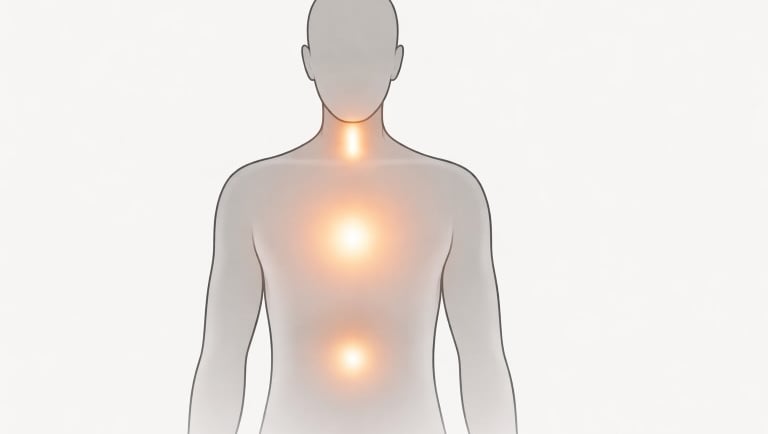
How Content-Free Hypnosis Works Without Retelling Your Story
Opening definition
Content-free hypnosis is a pattern-based change method where I work without needing the person to recount their full history or retell the events that created the problem.
Why this happens
Most distress patterns do not persist because the narrative is incomplete. They persist because a cue-response loop has become conditioned, efficient, and self-reinforcing. The mind learns connections quickly when the underlying state involves fear, loss, or overwhelm. Once this learning is encoded, the response can fire in the absence of explicit memory recall. A single cue, sometimes subtle, activates the entire physiological and cognitive chain.
The brain’s threat systems and grief systems prioritize speed over accuracy. They activate rapidly and without asking permission. The analytic mind, which tries to organize meaning, is slower. This creates the split many people describe, a clear understanding that a situation is not dangerous while the body behaves as if it is. When someone attempts to speak about the source of the pattern, the system often reads the act of telling as a cue itself. The trigger is not the story. The trigger is the felt association that speaking equals exposure or risk.
The research on avoidance, re-experiencing, and state-dependent memory supports this. When a memory is tied to high arousal, the associations formed in that state tend to re-emerge when similar internal or external cues appear. The National Institute of Mental Health provides a concise description of these patterns in PTSD symptom clusters: https://www.nimh.nih.gov/health/publications/post-traumatic-stress-disorder-ptsd
Internal experience recognition
People often notice that describing the situation in detail makes the reaction stronger instead of weaker. They may have the language for what happened, yet the body responds as if the event is present rather than past.
This usually feels like an immediate shift in physiology, tightness, heat, stomach pressure, a sense of rising internal noise, or a sudden drop into numbness. The person is not intentionally recalling the event. The system is reacting to the act of recollection.
This tends to show up when someone begins talking about a loss or a traumatic event and experiences a rapid change in clarity. Speech becomes fragmented. Thoughts become disorganized or tangled. They may switch abruptly into intellectual analysis, giving factual summaries without emotional content. Others go silent. The shift is not a choice. It is a conditioned protective response.
Some people notice that the moment a detail becomes too specific, their system contracts. For example, they can describe the general timeline of losing a pet, but a particular image, sound, or phrase produces a spike of intensity. The body responds before the narrative completes.
Others describe a pattern where there is no single event driving the reaction. The issue shows up as chronic activation. The system remains on alert long after the original reason has ended. Attempts to explain it do not reduce it, because the pattern is not being maintained by explanation.
Why talking and conventional methods struggle
Talk-based approaches rely on clarity, coherence, and accurate meaning-making. They assume that if the story is told fully and processed logically, the distress response will update. This works for cognitive distortions or misunderstandings. It does not work when the loop is maintained by implicit associations, physiological overcoupling, or a rapidly firing threat pattern.
There are structural constraints.
Narrative access is state-dependent.
When someone is activated, the part of the mind responsible for linear explanation goes offline. Asking for a coherent story during activation can force the person into either shutdown or over-explanation as compensation.The retelling amplifies the cue network.
If the story itself is a cue, speaking becomes a form of re-exposure. The person is not updating the pattern. They are reinforcing the link between the narrative and the activation.Language does not reach the mechanism producing the loop.
The loop begins before narrative construction starts. Reasoning cannot interrupt a pattern created in a non-reasoning part of the system.Privacy and difficulty with recall create additional friction.
Some people do not want to disclose details because the material is private, sensitive, or tied to shame. Others cannot access the details cleanly, only fragments. Forcing narrative completeness becomes counterproductive.
Because the problem is not being driven by insufficient insight, insight alone does not change it. This is where content-free work fits structurally. It targets the pattern rather than the description of the pattern.
Content-free orientation
A content-free orientation allows the corrective process to occur without requiring disclosure of the full sequence of events. The result is that the person does not need to relive or articulate the material to create an internal shift.
I do not need the specifics to work on the response pattern. I need to understand how the pattern shows up now, how the system behaves under load, and what the person wants to stop reinforcing.
This orientation is rooted in the difference between narrative material and conditioned activation. The narrative may be complex, but the activation loop is usually simple. The system is responding to cues, not conclusions.
For a more complete description of how I use content-free structure, I maintain a clear outline here: Content-Free Hypnosis Guide.
Practical micro-anchors
A person tries to describe the moment their pet died. They use general language to stay functional. The moment they approach a specific detail, their throat tightens and their attention narrows. The detail is not dangerous. The body treats it as a signal to brace.
Someone tries to explain why they cannot enter a particular room after a loss. The explanation is simple. The reaction is not. Their system senses the proximity of a cue and activates immediately. The person interprets this as fragility or overreaction, even though it is a learned association, not a character flaw.
Another person cannot talk about a traumatic event without switching into a flat, distant tone. They sound calm, but internally they are disconnected. This protective dissociation prevents full narrative expression, which is why insisting on detail creates more shutdown rather than more clarity.
A person with chronic anxiety notices that talking about the cause makes them spiral into analysis. Each retelling inflates the sense of threat. They are not amplifying the event. They are amplifying the cue.
Pattern chronification
When the issue is not addressed, the trigger network usually expands. The system becomes more efficient at predicting threat, which means it starts responding sooner and to more cues. People begin shaping their lives around avoiding activation. This can include avoiding conversations, avoiding reminders, avoiding specific tasks, or avoiding entire categories of experience.
These avoidance patterns reduce flexibility. They also increase anticipatory monitoring. The person becomes hyper-aware of their internal state, scanning for signs that the reaction might appear. This scanning amplifies the problem, because the system interprets the monitoring as evidence of risk.
Over time, the loop becomes self-sustaining. The original event may matter less than the pattern that formed around it. The person may assume the reaction reflects a personal limitation. In most cases, it reflects a conditioned response that has not been properly interrupted.
If your dominant pattern is anxiety-based, the structural entry point I use for that work is documented here: anxiety-focused hypnotherapy.
FAQ
Do I need to share the details of what happened?
No. The work can target the activation pattern without requiring precise narrative disclosure.
Is this the same as avoiding the issue?
No. Avoidance reduces exposure to cues. Content-free work engages the pattern directly without retelling.
Does this approach work for trauma and grief responses?
Yes. It is commonly used when recounting the experience spikes activation or when the person chooses privacy.
What if I do not remember everything clearly?
Clear memory is not required. The work focuses on the pattern that is active now, not on reconstructing the full timeline.
Can this replace medical or psychiatric treatment?
No. If you have medical or psychiatric concerns, appropriate licensed care should remain your primary resource.
When the system is ready for a different kind of shift, that’s where my work fits.
This article is informational only and not medical or psychological advice.
Address
Based in Los Angeles, CA
Online sessions available worldwide
Contacts

