
Coping with Empty Routines After Pet Loss | Marc Cooper
Struggling with habit holes and empty routines after losing your pet? Learn gentle strategies to rebuild meaning and navigate grief with compassion.
PET LOSS
Marc Cooper
1/5/20268 min read
Coping with Empty Routines After Pet Loss
You wake up at 6:47 a.m.
Your hand reaches for the blanket at the foot of the bed before your brain catches up. There's no weight there. No warmth. No sleepy grumble as you shift positions.
The silence hits differently in the morning.
You swing your legs out of bed anyway, muscle memory pulling you toward the kitchen. Halfway there, you stop. Because there's no bowl to fill. No expectant eyes tracking your every move. No click of nails on hardwood.
The routine is still there.
But the reason for it? Gone.
And that absence, that is what guts you.
The Invisible Architecture of Loss
Nobody tells you about losing a pet: the grief isn't just emotional. It's physical. It lives in your hands, in your feet, in the automatic gestures you've performed thousands of times.
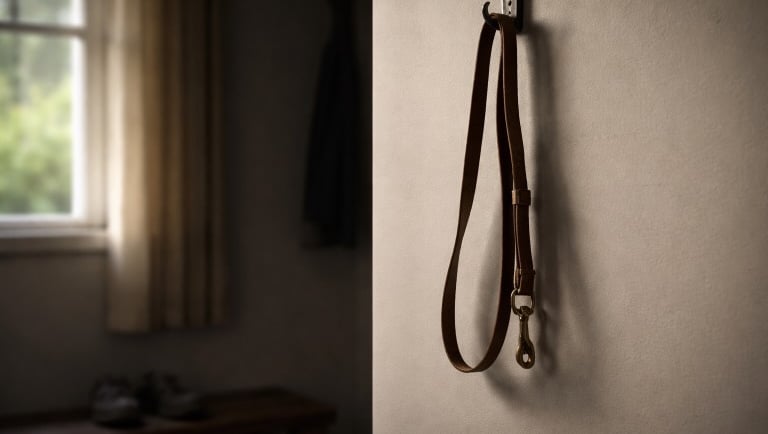
You reach for the leash that isn't there.
You listen for sounds that won't come.
You buy their favorite treats out of habit, then stand in the grocery aisle holding a bag you'll never open.
I call these "habit holes," the empty spaces where your routines used to hold meaning. And they're everywhere. Morning rituals. Evening walks. The way you positioned yourself on the couch to make room. The timing of your lunch break. The route you drove home from work.
Your pet didn't just occupy space in your life. They occupied time. They gave structure to your days, purpose to your movements, rhythm to your hours.
And when they're gone? That structure collapses.
But your body hasn't gotten the memo yet. So you keep performing the motions, like an actor who's forgotten there's no longer an audience.
Habit Holes: When Your Body Remembers
The thing about routines is they run deeper than conscious thought.
You don't decide to wake up at 6:47. You just do. Your internal clock learned that your dog needed to go out, that your cat expected breakfast, that someone depended on you showing up at that exact moment.
Even now.
Even though there's no one waiting.
Your nervous system is still wired for caregiving. For anticipation. For the micro-adjustments you made dozens of times a day: stepping carefully in the dark so you wouldn't trip over them, timing your shower around their feeding schedule, structuring your entire weekend around their needs.
And suddenly? All that neural patterning has nowhere to go.
Your body remembers what your mind knows is gone. You feel the shape of what's missing. You reach for routines that used to anchor you, and your hand closes on empty air.
Some people think the solution is to stop the routines immediately. Rip off the bandaid. Sleep in. Skip the morning walk. Throw out the bowls.
But that rarely works.
Because those routines aren't just about your pet. They're woven into your identity, your sense of self, your way of moving through the world. Dismantling them overnight doesn't heal the grief, it just adds disorientation on top of loss.
What I've seen work, both in my own experience with grief and in sessions with clients navigating pet loss, is something gentler.
Something that honors both the routine and the loss.
Gentle Substitutions: Reshaping Without Erasing
You don't have to abandon the structure.
You just need to find a new way to fill it.
Let's say you used to walk your dog every morning at 7 a.m. That walk wasn't just exercise. It was fresh air, movement, mental transition from sleep to waking, connection to your neighborhood, time to think or not think.
Your dog gave you permission to do something good for yourself. Without them, that permission feels revoked.
But you can keep the walk. You can keep the morning structure. You just change what you're walking toward.
Maybe you walk to a coffee shop you've never tried. Maybe you bring headphones and listen to something that helps you process emotion: a podcast, music, silence. Maybe you take a different route and notice things your dog would've stopped to sniff.
The routine stays. The meaning shifts.
Or let's say feeding time is the hardest moment. You used to scoop kibble at 5 p.m., like clockwork. Now 5 p.m. rolls around and the emptiness is suffocating.
You could try to power through, distract yourself, pretend it doesn't matter.
Or you could honor the habit and redirect it. Set a timer. When it goes off, you do something small but intentional: light a candle in their memory, write a sentence in a journal about what you're grateful for that day, step outside for two minutes and just breathe.
It's not about replacement. It's about transformation.
You're not pretending they're still here. You're acknowledging that their absence deserves space in your day, not as a wound you have to ignore, but as a shift you're learning to live with.
The Morning Silence Strategy
Mornings are brutal.
Because mornings were probably when your connection was strongest. When they were most excited to see you. When their needs were most immediate and your role was most clear.
Now? The silence feels aggressive.
So I suggest: don't fight the silence. Don't fill it with distraction right away. Sit in it for sixty seconds.
Just sixty seconds.
Let yourself feel the absence. Let the grief surface. Don't push it down or rush past it. Breathe into it. Acknowledge it. Say their name out loud if you want to.
And then, then, you move.
You make coffee. You open the blinds. You stretch. You put on music. You do something that signals to your nervous system: we're still here. We're still moving forward.
This isn't about "getting over it." It's about creating a rhythm that makes space for grief and momentum. Because if you let the absence swallow the entire morning, you'll start dreading waking up. And that's when the habit holes turn into something darker.
But if you can hold both, the grief and the movement, you give yourself a chance to rebuild meaning on your own terms.
Building Meaning: What Comes After the Routine
Those routines were never really about feeding or walking or grooming.
They were about mattering.
Your pet needed you. And that need gave you purpose. It structured your time, yes, but more than that, it gave you a role. Caregiver. Protector. Provider. Companion.
When they're gone, you lose the role.
And grief isn't just about missing them. It's about missing who you were with them.
So the question becomes: how do you rebuild meaning without them?
Not right away. Not tomorrow. But eventually.
Some people adopt another pet. And that's beautiful when the timing is right. But if you're reading this in the raw, early days of loss, that probably feels impossible. Or wrong. Or like a betrayal.
So let's talk about smaller steps.
What if you took one thing you used to do for them and redirected it outward?
Maybe you donate pet supplies to a shelter. Maybe you volunteer to walk dogs for people who can't. Maybe you sponsor a rescue animal in their name. Maybe you create something: a photo album, a small memorial, a piece of art that honors what they meant to you.
You're not replacing them. You're extending the love you had for them into the world in a new form.
Or maybe the meaning you build has nothing to do with animals. Maybe this loss cracks you open in a way that makes you rethink what matters. Maybe you start writing. Maybe you reconnect with old friends. Maybe you finally sign up for that thing you've been putting off.
Grief has a way of clarifying priorities.
Your pet taught you how to love without conditions, how to be present, how to find joy in the smallest moments. Those lessons don't disappear when they do.
But you have to choose to carry them forward.
The Role of Hypnosis in Navigating Habit Holes
I'm a hypnotherapist. So you probably expected me to bring this up sooner.
But I don't lead with technique. I lead with understanding.
Because if you don't understand what's actually happening, why the mornings hurt, why the routines feel impossible, why your nervous system is stuck in caregiving mode, then no amount of hypnosis will land.
But once you do understand? That's when content-free hypnosis becomes incredibly useful.
Content-free hypnosis doesn't require you to talk about your pet. You don't have to describe the loss, relive the details, or even name the emotion. You just let your subconscious process what needs processing, at its own pace.
And why that matters for habit holes specifically: those routines live in your subconscious. They're not rational decisions. They're patterned responses your nervous system learned through repetition.
You can't think your way out of reaching for the leash that isn't there. But you can retrain your nervous system to recognize the new reality without the constant shock of absence.
In sessions, mostly online, because that's how 90% of my work happens now, we use hypnosis to help your subconscious release the expectation that's causing the pain. Not the memory of your pet. Not the love. Just the automatic loop that says "they should be here" every time you step into the kitchen.
We're gently updating the system. Teaching it that absence doesn't have to equal wrongness. That you can honor what was without being trapped in what isn't.
It's subtle. It's non-invasive. And it doesn't require you to "talk through" your grief if you're not ready.
If you've been struggling with the empty routines, if the mornings feel unbearable, if the habit holes are swallowing you, this approach might help. You can explore more about how it works in my book, Forever in Our Hearts, or reach out for a session. No pressure. Just an option if you're ready.
Moving Forward Without Moving On
People will tell you to "move on."
They mean well. But they don't understand.
You don't move on from a love like this. You move forward, carrying it with you, letting it change shape, finding new ways to hold it.
The routines will shift. The habit holes will slowly fill with new meaning. The mornings will eventually feel less heavy.
But your pet will always be part of the structure of your life. Not as an absence. As a foundation.
The love you built together doesn't disappear. It just transforms.
And the routines you're rebuilding now? They're not replacements. They're continuations.
Because you learned something from the way you cared for them. You learned how to show up. How to be consistent. How to find meaning in small, repeated acts of devotion.
That skill doesn't die with them.
It just finds new expressions.
And maybe, eventually, you'll wake up one morning and realize the silence doesn't hurt quite as much. Not because you've forgotten. But because you've learned to live alongside the absence instead of against it.
That's not moving on.
That's healing.
FAQ: Coping with Empty Routines After Pet Loss
How long does it take for the routines to stop hurting?
There's no set timeline. Some people find relief in weeks; others take months. It depends on how deeply the routines were intertwined with your bond, how suddenly the loss occurred, and how much support you have in processing grief. Be patient with yourself, there's no "should" involved.
Is it okay to keep doing the routines even without my pet?
Yes. If the routine brought structure or comfort, keep it. You're allowed to adapt it in ways that honor the loss without erasing the habit. The goal isn't to pretend they're still here, it's to find new meaning in the structure they helped create.
Should I adopt another pet to fill the emptiness?
Only when you're ready. Adopting out of desperation rarely works. Give yourself time to grieve, to process, to rebuild meaning in other ways first. When the time is right, you'll know. And it won't feel like replacement, it'll feel like expansion.
What if I feel guilty for moving forward?
Guilt is common in grief. You might feel like moving forward means leaving them behind. But loving them doesn't require suffering. They wouldn't want that for you. Moving forward with their memory, carrying what they taught you into new routines, is how you honor them best.
Can hypnosis really help with something as emotional as pet loss?
Yes. Hypnosis helps your subconscious process what your conscious mind struggles to articulate. It's not about forgetting or "getting over it," it's about releasing the patterns that keep you stuck. Many clients find it eases the shock of absence and helps them navigate the habit holes without being consumed by them.
Address
Based in Los Angeles, CA
Online sessions available worldwide
Contacts

