
Racing Thoughts at Night: Why Your Mind Won't Stop
Racing thoughts at night keep millions of people awake. I explain why this happens, how the pattern works, and why conventional approaches often fail to interrupt it.
ANXIETY
Marc Cooper
4/6/20266 min read
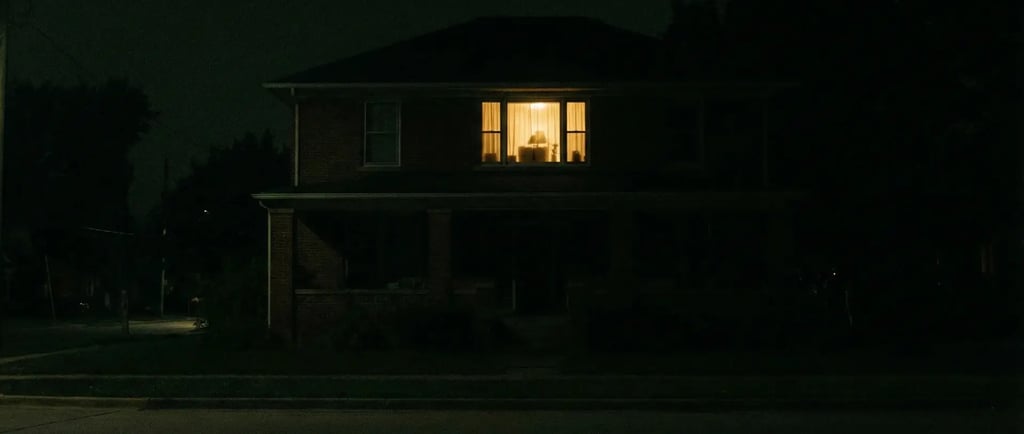
Racing Thoughts at Night: Why Your Mind Won't Stop
Racing thoughts at night are not a sleep problem. They are a cognitive and physiological dysregulation pattern that happens to peak at night, when the structural supports that suppress it during the day are gone.
What Racing Thoughts at Night Actually Are
The term gets misused constantly. People describe it as "overthinking" or "worrying." Those words aren't wrong, but they're imprecise. Racing thoughts at night are a specific state where the mind cycles rapidly through content, scenarios, memories, or projections without completing any of them. The loop doesn't resolve. It restarts.
This is distinct from ordinary problem-solving or even ordinary worry. It has a driven quality. The person isn't choosing to think about these things. The thoughts are arriving, demanding processing, and the processing never finishes.
Why This Happens: The Mechanism
The brain is an anticipation and threat-detection system. During the day, external demands structure attention. Meetings, conversations, tasks, movement, and sensory input all create orienting responses that redirect cognitive resources toward the environment.
Night removes all of that.
When the external environment quiets, the nervous system loses its orienting anchors. Internal signals, particularly anything tagged as unresolved or potentially threatening, can then rise to the foreground without competition. This is not pathology. It's the system doing what it's built to do.
The problem is calibration. In individuals whose nervous systems are running with elevated baseline arousal, the threshold for what gets flagged as "unresolved" is much lower. Benign items, minor decisions, old memories, vague future concerns, get flagged and queued. The queue is long. The processing loop runs without a stop condition.
Research published in Comprehensive Psychiatry confirms that racing thoughts at bedtime are distinct from rumination and worry, and are more specifically predictive of sleep-onset insomnia severity than either of those better-known constructs. The loop isn't just anxious thinking. It's a different mechanism.
This is compounded by hyperarousal, which is itself a product of chronic stress, unprocessed emotional material, or patterns established during periods of genuine threat. Once hyperarousal is a baseline state, the brain doesn't downshift easily. Sleep onset requires a shift in autonomic tone that the aroused nervous system resists.
The racing continues because the system believes, at a functional level, that stopping would be unsafe.
How Racing Thoughts Feel from the Inside
People often notice that the content of the thoughts changes, but the quality of the experience stays the same. It doesn't matter whether they're cycling through work problems, relationship scenarios, health concerns, or abstract fears. The texture is consistent: urgent, unresolvable, looping.
This usually feels like being unable to land anywhere. The mind touches one thing, moves to the next, returns to the first. There's often a sense of being slightly behind the thoughts, as if observing them rather than directing them.
There's often a metacognitive layer running simultaneously. The person is thinking about the fact that they're thinking. They're aware it's not helping. They're trying to stop it. That effort becomes another object in the loop.
Fatigue tends to make this worse, not better. This is counterintuitive, but it reflects the dynamic accurately: the depleted prefrontal cortex loses inhibitory capacity. The system that would normally manage the cycling loses its authority. The loops become freer, faster, less coherent.
People often describe a mounting sense of frustrated helplessness. Not just anxiety about the content of the thoughts, but anxiety about the fact of having them.
Why Conventional Approaches Struggle
The most common responses to racing thoughts at night are cognitive. Count backward. Write in a journal. Make a to-do list. Breathe. These approaches operate on the assumption that the problem is informational: the mind is running because it has something to resolve.
Sometimes that's partially true. But the approach still fails, because it requires the same cognitive system that's caught in the loop to regulate itself. That system is not available. It's occupied.
You can't use the instrument that's malfunctioning to repair itself.
Cognitive interventions also tend to engage with the content of the thoughts. They ask the person to evaluate, reframe, or contextualize what they're thinking about. This is an additional cognitive demand placed on a system that is already overwhelmed. It doesn't interrupt the loop. It adds to it.
Sleep hygiene advice faces a different problem. It targets behavior, not the underlying regulatory state. Going to bed at the same time and keeping the room dark are sensible practices. They don't address a nervous system that's running at a calibration that makes rest structurally inaccessible.
A Different Orientation
The racing thought pattern has a neurological and functional substrate. It isn't a content problem. It's a state problem. The system is locked in a mode that isn't available for transition.
Approaches that work at the level of the state, rather than at the level of the thought content, operate differently. They don't ask the person to manage what they're thinking. They create conditions where the system can shift its own regulatory mode.
This distinction matters. When you try to think your way out of racing thoughts, you're inside the system you're trying to exit. When the approach works at a different level, the content becomes irrelevant. The loop loses its authority. The system can do something else.
That's the orientation behind content-free hypnosis. It doesn't engage with the thoughts. It works with the system running them.
Micro-Anchors: What the Pattern Looks Like in Practice
People with this pattern often report that they feel fine during the day. Functional, even calm. The moment they lie down and the room is quiet, something shifts. The thoughts that were manageable while they were moving become inescapable when they stop.
This isn't a coincidence. It's structural. The day provided containment. Night removed it.
A second pattern: the person falls asleep, wakes at 2 or 3 a.m., and the racing begins immediately. Not gradually. There's no groggy transition. The mind is already running when awareness returns. This suggests the pattern wasn't resolved during sleep; it was temporarily suspended.
A third: the thoughts aren't always catastrophic. Some people cycle through mundane things, rehearsing conversations that already happened, planning things that don't need planning, reviewing things they already know. The content feels almost pointless. The drive behind it doesn't.
What Happens When This Pattern Persists
Chronic sleep disruption from racing thoughts creates a predictable cascade. The immediate effect is reduced sleep duration and quality. Over time, this compounds into cognitive impairment, emotional dysregulation, and reduced stress tolerance. The very capacities the person needs to manage the underlying arousal are progressively degraded.
There is also a conditioning effect. The bed, the bedroom, the act of lying down, become associated with the racing state. The environment that should cue rest begins cuing hyperarousal instead. This is a learned association, and it deepens with repetition.
People also develop secondary anxiety around sleep itself. They start dreading bedtime. They lie down already braced for the loop to start. That anticipatory arousal raises the baseline further.
Left unaddressed, this pattern tends not to self-correct. The system stabilizes around the dysregulated state.
For people whose racing thoughts are connected to grief, loss, or unprocessed anxiety, the pattern often has a specific emotional texture beneath the cycling content. The thoughts aren't random. They're organized around something that isn't resolved at a deeper level than cognition. Approaches that reach that level, rather than managing the surface presentation, work differently than insight or strategy alone. My work with anxiety and trauma addresses this directly.
FAQ
Why do racing thoughts happen specifically at night? Daytime activity provides continuous sensory and cognitive demands that redirect attention outward. At night, those external anchors disappear. Internal signals, particularly anything the nervous system has tagged as unresolved, surface without competition. A chronically elevated baseline makes this transition more dramatic.
Is this the same as anxiety? They often co-occur, but they're not identical. Some people experience racing thoughts without experiencing what they'd call anxiety. The underlying mechanism involves dysregulation of the arousal system and failure of the inhibitory processes that would normally suppress cycling thought patterns.
Why doesn't journaling work? Journaling can help some people some of the time. It tends to fail when the racing is driven by nervous system arousal rather than genuinely unresolved informational problems. Adding more cognitive processing to a system that's already overloaded usually extends the loop rather than closing it.
Why does fatigue make it worse? The prefrontal cortex manages inhibitory control, including the suppression of intrusive or cycling thoughts. Fatigue degrades prefrontal function. As inhibitory capacity drops, thought loops become less regulated, not more. This is why exhausted people often can't stop thinking.
Can this pattern be changed without medication? Yes. Medication addresses the symptomatic presentation, not the regulatory pattern underneath it. Approaches that work at the level of the nervous system's regulatory state, rather than at the level of the thought content, can produce durable shifts without pharmacological intervention.
When this pattern is active and insight alone hasn't moved it, that's the kind of work I do.
This article is informational only and not medical or psychological advice.
Address
Based in Los Angeles, CA
Online sessions available worldwide
Contacts

