
Sleep After Pet Loss: Calm Night Anxiety Gently
Can’t sleep after losing your pet? Calm night anxiety and racing thoughts with content-free hypnosis, without retelling painful memories.
PET LOSSCONTENT-FREE HYPNOSIS
Marc Cooper
12/15/20256 min read
Sleepless After Pet Loss: Calming Night Anxiety Without Retelling Pain
If you’re reading this in the small hours of the night…
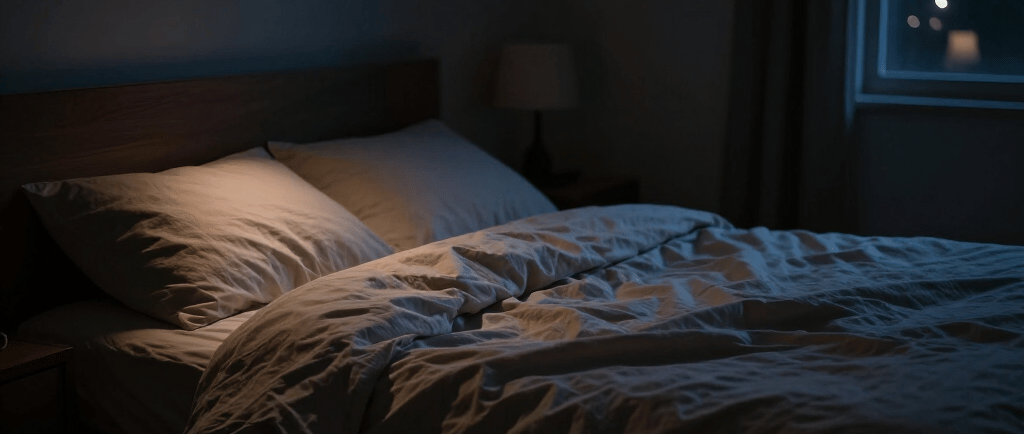
The house is quiet.
Too quiet.
The kind of quiet where every thought suddenly gets a microphone.
You close your eyes. You try to sleep. And then it starts.
Your chest feels tight. Your stomach flips. Your mind runs straight back to what hurts most.
The loss.
The absence.
The space beside the bed that shouldn’t feel this empty.
You’re exhausted. But sleep won’t come.
And the last thing you want to do is talk through it all again.
If that’s you, you’re not broken.
You’re grieving.
And nights are where grief likes to show up uninvited.
I work with people all over the world, and around 90 percent of my sessions are online. Different countries. Different time zones. Same story.
“Daytime is manageable. Nights are unbearable.”
So let’s talk about why nights feel so hard after pet loss…
And more importantly, how you can calm night anxiety without retelling the pain.
Gently. Safely. At your pace.
Why nights are hard after pet loss
Grief doesn’t follow a schedule.
But your nervous system does.
During the day, there’s noise. Movement. Distraction. A reason to keep going.
At night… all of that drops away.
The lights dim. The house slows. Your body finally stops bracing.
And that’s when the mind steps in.
This isn’t weakness.
It’s biology.
When you lie down, your brain shifts out of problem-solving mode and into default mode. That’s the state where memories, images, and emotions start floating to the surface.
If you’ve lost a pet, your brain is still trying to make sense of the separation. Your nervous system is still scanning for what’s missing.
So you replay moments.
The last day.
The sounds.
The silence afterward.
You might notice racing thoughts, a pounding heart, or that hollow ache in your chest that feels like it’s echoing.
Sleep becomes impossible because your system doesn’t feel safe enough to let go.
And here’s something important.
Most people try to fix this by forcing sleep.
Breathing apps.
Counting sheep.
Telling themselves to stop thinking.
That often backfires.
Because grief doesn’t respond to pressure.
It responds to safety.
That’s why talking through the loss over and over can actually make nights worse for some people. Every retelling reactivates the emotional charge.
So what do you do if you don’t want to relive it… but you still need rest?
This is where content-free hypnosis becomes powerful.
A calming protocol for night anxiety without retelling pain
Before we go any further, here are the two key resources this article builds on:
I’m calling these out clearly because they matter, and because many people miss links when they’re exhausted or reading late at night.
Let me be clear about something.
You do not need to explain your grief to heal it.
You do not need to describe the worst moments.
You do not need to find the “right words.”
Your subconscious already knows what hurts.
My role is to help your nervous system settle enough for that processing to happen quietly, without dragging you back through the details.
This is the foundation of my work with pet loss and night anxiety, and it’s explained fully in my guide to content-free hypnosis.
Here’s what the calming protocol looks like in real life.
Step 1: Create a signal of safety
Before sleep, your body needs a signal that the day is over.
Not a lecture. Not a rule.
A signal.
It might be something small.
Dimming the lights.
Sitting on the edge of the bed and placing your feet flat on the floor.
Wrapping up in the same blanket every night.
Consistency matters more than technique.
Your nervous system learns through repetition.
When you repeat a simple cue, your body starts associating it with slowing down.
This isn’t about relaxation yet.
It’s about permission.
Step 2: Let the body lead, not the mind
Night anxiety is rarely solved by thinking.
It’s solved by sensation.
In content-free hypnosis, we bypass the storytelling mind and work directly with the subconscious through rhythm, imagery, and focused attention.
You don’t have to say what you’re grieving.
You don’t have to picture anything painful.
You simply allow your awareness to rest in neutral sensations.
The weight of your body.
The rise and fall of your breath.
The feeling of being supported by the bed.
When the body softens, the mind follows.
Not the other way around.
Step 3: Allow processing to happen in the background
This is the part most people don’t expect.
When you stop forcing yourself to “deal with it,” your subconscious finally gets space to work.
Grief doesn’t need a spotlight.
It needs room.
In hypnosis without talking, your mind can drift while your system recalibrates.
Clients often describe it like this.
“It feels like something shifted, but I couldn’t tell you what.”
That’s exactly the point.
Processing doesn’t have to be dramatic to be effective.
Step 4: Drift, don’t drop
Sleep after loss often comes in waves.
You may drift in and out at first.
That’s okay.
The goal isn’t to knock yourself out.
It’s to create enough calm that sleep can find you again.
Think of it like floating instead of sinking.
No effort.
No forcing.
Just allowing.
This approach is central to my work with pet loss hypnosis, especially for clients who feel overwhelmed at night.
After-session routines that protect your sleep
If night anxiety is part of a wider pattern of overwhelm, looping thoughts, or emotional overload, this same approach is also used in my work with anxiety and nervous-system reset sessions. You can explore that here if it feels relevant: Anxiety Hypnosis Support.
What you do after calming your nervous system matters.
A lot.
Here are simple, protective routines I often suggest.
No perfection required.
Keep stimulation low
Avoid bright screens if you can.
If you must use your phone, lower the brightness and keep it boring.
No emotional content.
No scrolling through memories.
Your system is open and sensitive in this state.
Treat it gently.
Anchor with something neutral
This could be white noise.
A fan.
Soft rain sounds.
Something predictable.
Predictability equals safety for the nervous system.
If you wake up again
Don’t panic.
Don’t check the clock.
Return to the same calming cue you used before.
The body remembers.
You’re teaching it a new response.
That takes repetition, not force.
Be kind the next day
Grief recovery isn’t linear.
If you slept a little better, that counts.
If you didn’t, you didn’t fail.
You’re learning a new rhythm.
Why this works when talking doesn’t
Some people find comfort in talking through their loss.
Others feel worse.
Neither is wrong.
But if night anxiety spikes when you revisit the story, content-free hypnosis offers another path.
No analysis.
No retelling.
No emotional excavation.
Just calm.
Regulation.
And gradual relief.
This approach is also effective for anxiety, trauma, and mental overload, because it respects the nervous system instead of pushing it.
You can learn more about how this works in my Content-Free Hypnosis Guide.
A personal word before you try to sleep tonight
If your nights have felt endless since losing your pet, I want you to hear this.
Nothing is wrong with you.
Your love didn’t disappear.
It changed shape.
And your body is still catching up.
You don’t have to carry the pain into every night.
You don’t have to explain it to anyone.
And you don’t have to do this alone.
If you’d like support that meets you where you are, quietly, gently, and mostly online, you can explore my work with pet loss hypnosis.
When you’re ready… I’m here.
Frequently Asked Questions
Can hypnosis help with sleep after pet loss?
Yes. Hypnosis helps calm the nervous system so sleep can return naturally, without forcing or reliving painful memories.
Do I have to talk about my pet during hypnosis?
No. Content-free hypnosis allows healing without discussing details or retelling the loss.
Is online hypnosis effective for night anxiety?
Yes. Around 90 percent of my sessions are online, and clients often feel safer working from their own bed or home.
How many sessions does it usually take?
Some people notice relief quickly, others take a few sessions. It depends on how long the nervous system has been under strain.
What if my anxiety gets worse at night?
That’s common after loss. Night removes distractions and allows emotions to surface. Calming the body first is key.
Address
Based in Los Angeles, CA
Online sessions available worldwide
Contacts

